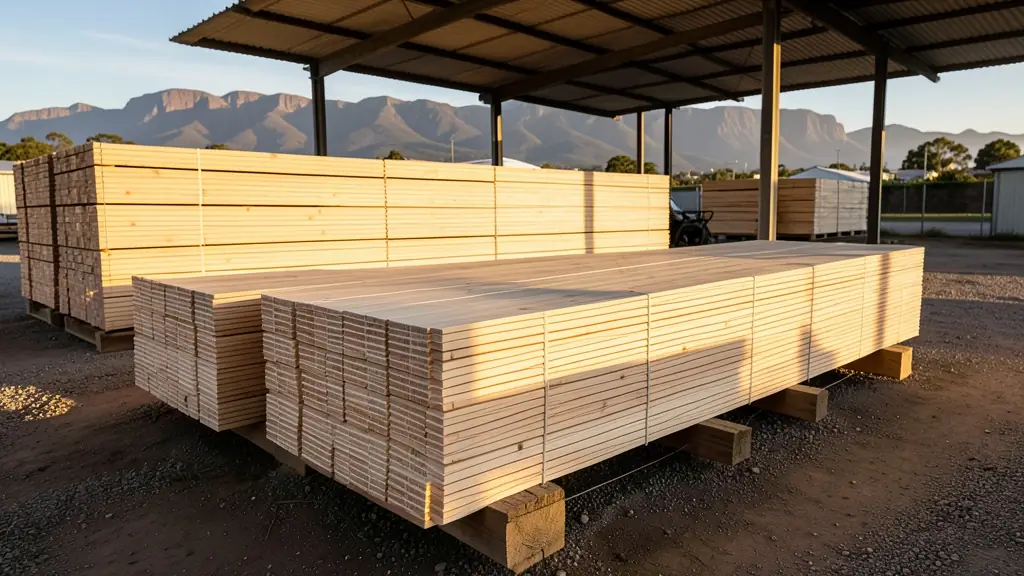
Almost every timber wendy in the country is built from pine, and the wendy house planks on the walls do most of the work: they keep out wind and rain, they hold the frame square and they take the knocks. Two units of the same size can look identical in a photo and be built from planks of quite different thickness. Whether you are buying a whole wendy, replacing rotten sides on an old one or building your own, it pays to know the profiles, the grades and the treatment. Suppliers near you can quote from one request.
Tongue and groove, shiplap and log-lap
- Tongue and groove: each plank has a tongue on one edge that slots into a groove on the next, giving a flat wall with tight joints.
- Shiplap or weatherboard: planks overlap or rebate into each other so rain runs off the face.
- Log-lap: shiplap planks machined round on the outside so the wall looks like stacked logs. For real log walls, see log cabins.
All three can be fixed horizontally. Ask the supplier which profile they would use for walls that face the weather.
Thickness and grade, the real price difference
Many wendy suppliers sell a cheaper thin plank, often called "standard", and a thicker "heavy duty" or "luxury" plank. Thicker planks are stronger, insulate a little better and last longer before they warp or split. Thin planks may suit a small tool shed; for a room someone sleeps in, most builders suggest the thicker grade. Grade names differ from yard to yard, so ask for the actual thickness in millimetres on the quote. It is one of the biggest reasons wendy house prices vary.
Treatment against rot, borer and termites
Untreated pine near the ground rots and is eaten by borer and termites. Timber for the floor bearers, joists and bottom plates should be pressure treated, often CCA treated, and kept off the soil. Ask whether the planks themselves are treated or only sealed. Treated timber should not be burnt and the offcuts should be disposed of properly; ask the merchant. Once the wendy is up, a sealer or paint protects the face from sun and rain (see paint and treatment).
Buying timber for DIY or repairs
For a DIY build you will need more than wall planks: studs and plates for the frame, rafters or purlins, floor joists and floorboards, and battens. Make a cutting list from your drawing, which our page on wendy house plans can help with. For repairs, take an offcut of the old plank to the merchant so the profile and thickness match, since a plank from another supplier may not slot in. Check each length for straightness, big loose knots and splits before it goes on the bakkie.
What to put in your request
- Plank profile: tongue and groove, shiplap, log-lap
- Thickness and width in millimetres
- Lengths and the number of each
- Frame, floor and roof timber, if needed
- Collection or delivery, and your area
Wendy House Timber and Planks for homes, landlords, farms, schools and sites
- Homeowners: a handful of matching planks to replace the rotten bottom row on an older wendy
- Landlords and backyard rentals: heavy duty planks for a backyard room that tenants will live in all year
- Farms and smallholdings: treated timber and planks for a feed store or a row of workers' rooms
- Schools, crèches and training centres: thicker planks for a playroom wall that will take bumps from children every day
- Small businesses and home offices: log-lap cladding to give a coffee stand or farm stall a cabin look
- Construction and mine sites: cheap standard planks for a temporary store that will come down after the job
- Guesthouses, campsites and resorts: log-lap boards to reclad tired guest cabins so they match a new unit
- Churches, clinics and NGOs: planks and treated framing for a volunteer build of a storeroom or hall
- Builders, developers and installers: a steady supply of planks and frame timber in fixed profiles for repeat units