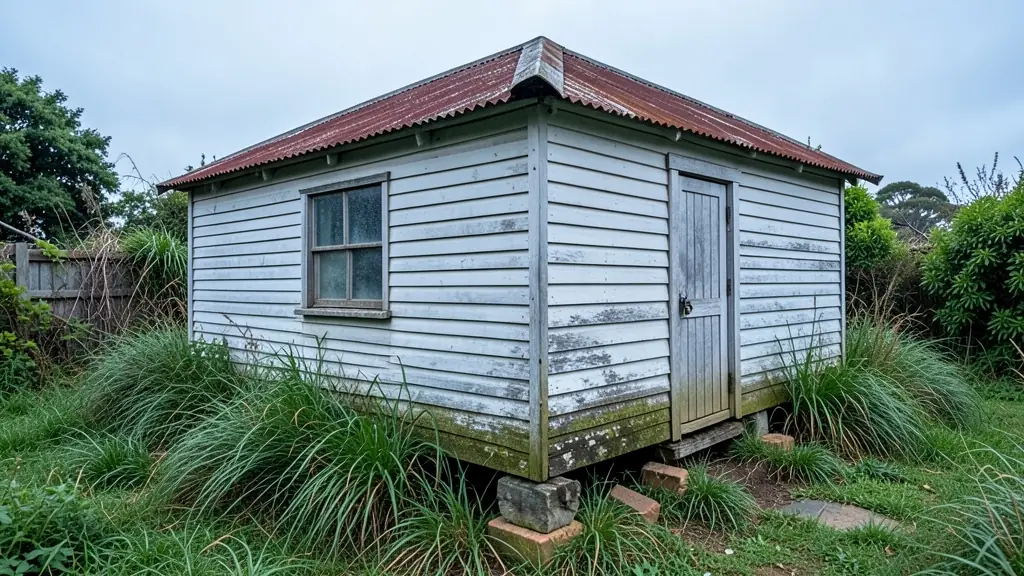
A sound second hand wendy can give you thick planks and a solid frame for less than new, which is why used wendy houses for sale are searched so often, from Cape Town to Gauteng. The catch is that you are buying something already weathered, and you usually have to pay to take it down, move it and put it back up. This page covers what to inspect, what the move involves, which parts often need replacing, and how to avoid paying for a building that does not exist. A request here can also reach movers and builders.
A walk-around checklist
- Bottom of the walls: push a screwdriver into the lowest planks and frame. Soft wood means rot.
- Floor: walk every part. Bounce or sag means tired bearers or boards.
- Small round holes and fine dust: signs of borer.
- Mud tunnels on the base or frame: signs of termites.
- Roof: look up from inside on a bright day for pinholes, rust and stains.
- Doors and windows: check they open and close and that the frames are not soft.
- Panels: ask how it was put together and whether panels come apart without breaking.
What moving it really involves
The building has to be dismantled panel by panel, loaded onto a truck, driven to your place and rebuilt on a new level base. Each of those is a cost: the dismantling, the truck and the distance, the rebuild, and the base at your end. Ask whether the seller, a mover or a builder does each part, and get it priced before you agree to buy. Wendy house removals covers the move in more detail.
Panels should be numbered as they come down. It makes the rebuild far quicker. Measure the access at both ends too: a panel that came out through a wide gate may not fit down your side passage. Ask who is responsible for panels damaged on the truck.
Planks, sheets and the paint afterwards
Some planks and frame pieces usually crack or turn out rotten during the move. Ask whether replacements are included, and match the profile and thickness so the new pieces fit. Old roof screws often need replacing, and rusty sheets may too. Once it is back up, treat any bare or new timber and seal or paint the whole building, since the old coating will be patchy after the move; see wendy house paint.
Staying clear of scams
Online second hand listings attract fake sellers. See the wendy in person, or have someone you trust do it, before you pay anything. Be wary of a low price with pressure to pay a deposit to hold it, and of sellers who cannot show it standing. Pay on collection where you can. Get the seller's full name, address and a phone number you have actually called, and never pay someone other than the person you met. If a mover is involved, deal with the mover directly. Compare the total with a new unit on wendy house prices.
What to put in your request
- Where the used wendy is now
- Its size and plank thickness
- Where it must go, and access at both ends
- Whether you need a new base
- Photos of the bottom planks and floor
Used Wendy Houses for homes, landlords, farms, schools and sites
- Homeowners: a sound second hand 3 x 4 m wendy bought from a neighbour and rebuilt on a new slab
- Landlords and backyard rentals: a used unit with thick planks rebuilt, rewired and sealed before a tenant moves in
- Farms and smallholdings: an old wendy bought cheaply in town and rebuilt as a store on the farm
- Schools, crèches and training centres: a donated wendy dismantled from a parent's garden and rebuilt as a storeroom
- Small businesses and home offices: a used timber room moved to a new shop site when the lease changes
- Construction and mine sites: a site office bought from a finished project and moved to the next one
- Guesthouses, campsites and resorts: a second hand timber unit refurbished as a laundry or staff room
- Churches, clinics and NGOs: a church receiving a donated wendy and finding a mover to rebuild it
- Builders, developers and installers: a builder who takes down, moves, repairs and rebuilds used units for buyers