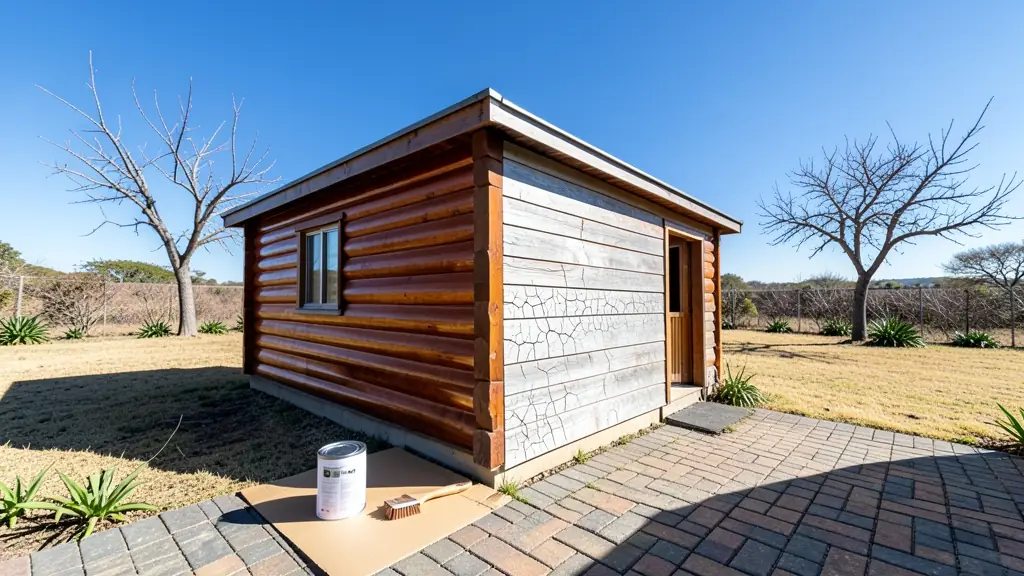
Bare pine left in the South African sun turns grey, then cracks and lets water into the grain, and that is where rot and borer begin. Choosing the right wendy house paint or sealer, and putting it on again before the old coat fails, is the cheapest way to make a wendy last. Fibre cement walls need a different kind of paint. This page covers sealers, stains, varnish and paint, how often to recoat, and what to do about borer, termites and soft wood. Painters near you can quote from one request.
Sealer, stain, varnish or paint
- Exterior wood sealer: soaks into the pine and shows the grain. Easy to recoat without sanding back to bare wood.
- Stain: a sealer with colour, so the wood can look darker without hiding the grain.
- Varnish: a clear film. It looks good at first, but on sunny walls it can crack and peel.
- Paint: an opaque coat made for exterior timber, in any colour. It covers mismatched planks after a repair.
Whatever you choose, use a product made for outside timber and follow the maker's instructions on drying time.
How often to recoat
The maker's recommended interval is the guide, but walls facing the afternoon sun or the rain often need a coat every year or two, while sheltered walls last longer. Signs it is time: the colour fades, water no longer beads on the surface, or the wood looks dry and grey. Wash off dust and mould first and let the wood dry. A wendy on the coast or the Highveld may weather quite differently, so ask a local painter. Our tools help you work out the wall area and the litres.
Painting nutec walls
Fibre cement boards take paint well, but use paint suitable for fibre cement, often over a primer the maker recommends. Fill and seal the joints first, or the paint will crack along them. Never sand or grind the boards dry to prepare them: the dust contains silica. A light-coloured paint keeps a nutec house a little cooler in summer. For the boards themselves, see nutec boards.
Borer, termites and soft wood
Small round holes with fine powder below them are a sign of borer; mud tubes on the base or soft, hollow wood can mean termites. Both need treatment by a pest control company, and termites may need treatment of the soil around the base too. Rot shows as soft, dark wood, usually at the bottom of the walls and in the floor. Cut it out and replace it with treated timber of the same profile (see wendy house planks), then fix the cause: soil against the planks, a leak or a blocked gutter.
What to put in your request
- Size of the building or the wall area
- Pine, fibre cement, or both
- Sealer, stain, varnish or paint, and colour
- Photos of the current state of the walls
- Any borer, termite or rot you have seen
Wendy House Paint and Treatment for homes, landlords, farms, schools and sites
- Homeowners: a weathered grey wendy cleaned and sealed in a warm brown before the summer rains
- Landlords and backyard rentals: rental rooms repainted between tenants so they let quickly and keep out the damp
- Farms and smallholdings: workers' rooms and stores treated for borer and resealed after a dry season
- Schools, crèches and training centres: a classroom wendy painted in a light colour with a finish suited to children
- Small businesses and home offices: a coffee stand or salon wendy painted to match the shop's colours
- Construction and mine sites: site offices given a quick protective coat between contracts
- Guesthouses, campsites and resorts: a row of cabins resealed on a set schedule so they all weather the same
- Churches, clinics and NGOs: volunteers painting a church hall in nutec with paint made for fibre cement
- Builders, developers and installers: a painting subcontractor to seal every new unit before handover