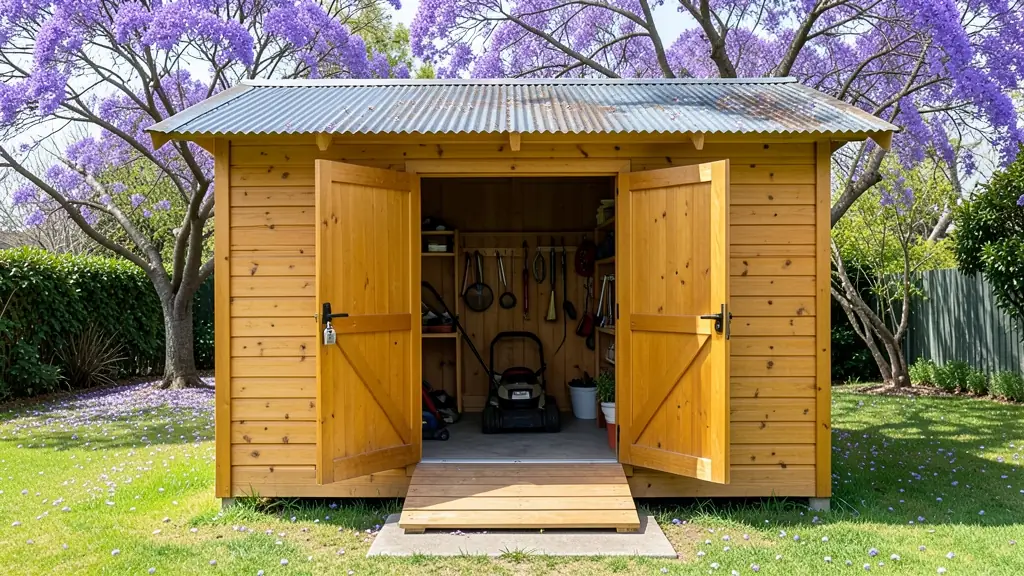
A garden shed gets the mower, the tools, the bikes and the pool chemicals out of the garage and out of the rain. In South Africa most are wendy-style pine buildings, but fibre cement, steel and plastic sheds are common too, and each has its own strengths. This page compares the materials, suggests sizes for what you store, and covers the details that make a shed easy to use: double doors, a ramp, shelves, a solid lock and a proper base. Send one request and shed suppliers near you will quote.
Four materials compared
- Timber: a wendy house shed in pine planks. Easy to fit shelves and hooks to, simple to repair, needs sealing and checks for borer and termites.
- Fibre cement: a nutec garden shed does not rot and termites leave it alone, and it can be painted. Boards can crack if hit hard. See nutec houses.
- Steel: a steel garden shed is usually a kit of profiled sheets. Ask about rust protection, especially at the coast.
- Plastic: light and low care, best for small storage. Ask about UV resistance.
In coastal towns, salt air is hard on steel and on cheap fixings, so ask for fixings suited to the coast whatever the shed is made of.
Sizing it for what goes inside
List what you need to store, then add space to walk in. A 2 x 2 m storage wendy house takes a mower, a wheelbarrow and hand tools along the walls. Bikes, garden furniture and pool equipment push you to 2 x 3 m or 3 x 3 m. If you also want a workbench, think 3 x 4 m. Hanging long-handled tools on the side walls frees a surprising amount of floor. Remember the door width: a ride-on mower or a stack of chairs needs double doors. Wendy house sizes has more on dimensions.
Doors, ramp, shelves and security
Double doors open the whole front. A short ramp makes rolling a mower or wheelbarrow in much easier. Shelving along the back wall and hooks on the side walls keep the floor clear. For security, ask for a strong hasp for a padlock or a proper lock, and screws that cannot be undone from the outside. A small window lets in light but can invite thieves; some people fit a burglar bar. Store pool chemicals as their labels say, dry and apart from the mower's fuel.
The base and the small print
Every shed needs a level, firm base that drains: a small slab, paving on compacted sand or treated bearers on blocks. Keep timber off the soil. See foundations. A very small tool shed, for example about 5 m² or less, can count as minor building work, but the municipality may still want to be told, and estates often have rules on where it can stand. If the shed stands near a boundary wall, leave a gap so you can reach the back to paint it. Seal timber sheds and recoat as the maker suggests.
What to put in your request
- What you need to store
- Size, and space available
- Timber, nutec, steel or plastic
- Double doors and a ramp, yes or no
- Base: existing paving, slab or none
Garden Sheds for homes, landlords, farms, schools and sites
- Homeowners: a 2 x 3 m pine shed with double doors and a ramp for the mower and bikes
- Landlords and backyard rentals: a row of small lockable sheds so each tenant has their own storage
- Farms and smallholdings: a fibre cement shed for fertiliser, seed and spray equipment that termites cannot touch
- Schools, crèches and training centres: a steel shed for sports equipment beside the field
- Small businesses and home offices: a landscaper's shed for mowers and trimmers with a strong lock
- Construction and mine sites: a lockable timber store for tools and cement bags on site
- Guesthouses, campsites and resorts: a tidy shed for pool chemicals and garden tools screened from guests
- Churches, clinics and NGOs: a shed for a community garden's tools and seedling trays
- Builders, developers and installers: an installer putting up shed kits and fitting shelving for clients