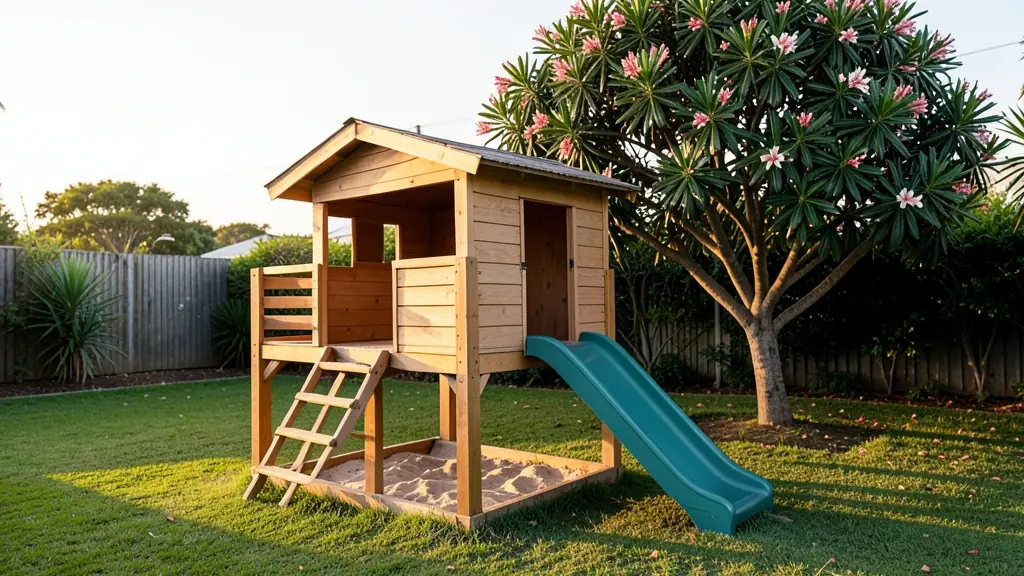
For a child, a small house of their own in the garden is hard to beat. Parents usually weigh up plastic wendy houses, which are light, wipe clean and need no sealing, against timber playhouses, which can be bigger, raised on a platform and fitted with a ladder, a slide or a sandpit. This page compares the two, covers the safety points worth checking before you buy, the finishes to use on timber, and the sizes that suit different ages. One request reaches playhouse makers and suppliers near you.
Plastic or timber
Plastic playhouses are moulded panels that clip or screw together. They suit toddlers, can be moved around the lawn and are easy to hose down. Strong sun fades and weakens some plastics over time, so ask whether the plastic is UV stabilised and keep it in some shade if you can. A light, empty plastic house can blow over in a strong wind, so ask whether it can be pegged down.
Timber playhouses are small wendies built for children, often on a raised floor. They can grow with the child, take a coat of paint in any colour and are easier to repair. They need sealing and the same care as any pine building; see wendy house paint.
Raised platforms, ladders and slides
A raised playhouse on posts with a ladder and a slide is a favourite for older children. Ask how high the platform is, whether it has a rail or wall around the open edges, and how the posts are fixed. Put soft ground under and around it: bark, sand or a deep lawn rather than paving. A sandpit underneath uses the space well. Make sure the slide faces away from walls and fences, with clear space at the bottom. Check the platform each season for loose bolts, cracked rungs and soft posts, and top up the bark or sand where it has thinned.
Safety checks before you pay
- Rounded edges and corners on everything a child can reach
- No nails or screws sticking out, inside or out
- Smooth, sanded timber with no splinters
- Doors that cannot trap fingers or lock from outside
- No gaps where small fingers can get caught (ask the maker how they avoid them)
- Windows without glass, or with safety glazing
- A child-safe finish, applied and fully dry before play (ask the maker)
Use treated timber for posts in the ground, and ask what treatment was used.
Sizes, siting and the rules
Small children are happy in a playhouse of a square metre or two; older children want space for a table and friends. Place it where you can see it from the house, away from the pool and the boundary wall. A very small playhouse, for example about 5 m² or less, can count as minor building work, though the municipality may want to be told. Bigger structures follow the same rules as any garden shed or wendy house.
What to put in your request
- Child's age and how many will play
- Plastic or timber
- Raised platform, ladder, slide or sandpit
- Space available in the garden
- Painted or left for you to finish
Kids' Wendy Houses for homes, landlords, farms, schools and sites
- Homeowners: a raised timber playhouse with a slide on the lawn, visible from the kitchen window
- Landlords and backyard rentals: a sturdy plastic playhouse in a shared complex garden that wipes clean
- Farms and smallholdings: a timber playhouse near the farmhouse for children and visiting cousins
- Schools, crèches and training centres: two plastic playhouses in a crèche play area, moved around for cleaning
- Small businesses and home offices: a play corner playhouse at a family restaurant or garden centre
- Construction and mine sites: a simple playhouse in a show house garden on a new housing development
- Guesthouses, campsites and resorts: a timber playhouse with a sandpit for guests' children near the pool fence
- Churches, clinics and NGOs: a donated playhouse for a children's home or community play park
- Builders, developers and installers: a carpenter building custom raised playhouses to order