
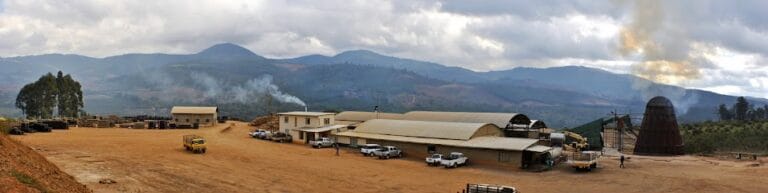
Diggersrest Timber Company is a Saw mill establishment in Greater Tzaneen Local Municipality, Limpopo, South Africa
Diggersrest Timber Company: Comprehensive timber solutions in the Greater Tzaneen area
Diggersrest Timber Company operates from the Georges Valley just outside Tzaneen in Limpopo, South Africa. Established in 1973, the business has grown from a family-run sawmill into a supplier of high‑quality timber products and related forestry services. The company positions itself as a full‑service timber partner, servicing customers across Southern Africa, including Botswana and Namibia, with a focus on quality, durability and sustainability.
As a sawmill-based operation, Diggersrest continually emphasises its capability to deliver both standard and customised timber products. The company’s portfolio includes A‑Grade and B‑Grade pallet material, droppers, laths, fencing and building poles, as well as a range of treated and untreated timber. A notable feature is the in‑house treatment facilities for CCA‑treated and creosote‑treated timber, which are SATAS accredited and aligned with South African National Standards (SANS) 457 and 1288. This combination of in‑house processing and formal accreditation is presented as a core strength, enabling reliable supply chains for fencing, agricultural infrastructure, netting, thatching and DIY projects.
Main services offered
- Sawmill production for pallet material (A‑Grade and B‑Grade), designed for packaging, shipping and industrial use.
- Treated timber facilities offering CCA-treated and creosote-treated products for outdoor and structural applications.
- Custom timber solutions, including droppers, laths, tomato poles and split poles, to meet specific project requirements.
- Untreated timber options alongside treated varieties, providing flexibility for diverse applications.
- Forestry services, including silviculture, tree felling and professional harvesting, complemented by sustainable management practices.
- By‑product utilisation, including sustainable wood chip production, reinforcing an integrated approach to timber manufacture.
Typical job types and applications
Based on the product range and stated capabilities, typical projects likely encompass fencing infrastructure (poles and droppers), agricultural installations, DIY timber builds, and packaging or pallet requirements. The timber is positioned for use in fencing, agriculture, netting, thatching and general DIY projects, with a focus on heavy‑duty efficacy for industrial applications through the pallet material and treated timber offerings.
How requests and orders typically work
Customers are expected to engage with the business to source timber products directly from the sawmill and treatment facilities. The site communicates that it operates SATAS‑accredited treatment facilities and adheres to SANS standards, signalling a process that emphasises quality verification and compliance. While specific ordering steps are not detailed on the site, the combination of in‑house processing, a broad product range and regional reach suggests that customers can specify product type (treated or untreated), grade (A or B), and customised timber solutions, with delivery or local collection arrangements likely arranged through the business network in Limpopo and neighbouring markets.
Forestry and sustainability focus
Diggersrest markets a holistic approach to timber and forest resources. The company highlights its sustainable forestry services, combining silviculture, felling, extraction and ongoing forest resource management. This stance positions the business as not only a timber supplier but also a partner in responsible stewardship, with a structure that supports long‑term resource availability for clients and communities alike.
Customer experience and community focus
The Our Story section frames Diggersrest as a community‑minded enterprise with long‑standing local roots. The business highlights SATAS accreditation, adherence to national timber standards, and a workforce of local employees. Partnerships with community initiatives and local contracting arrangements illustrate a broader commitment to regional development beyond immediate commercial activity. While visitor reviews are not quoted here, the narrative presents a reliable, accountable supplier with a clear emphasis on quality, safety and sustainability.
Practical tips for customers
- Check timber type and treatment: Determine whether CCA or creosote treatment is required for the intended outdoor or structural use, noting the safety and handling considerations associated with treated timber.
- Consider product standards: Look for SATAS accreditation and compliance with SANS 457 and 1288 to ensure durability and appropriate preservation for local conditions.
- Plan for regional delivery: With a footprint serving Botswana, Namibia and Southern Africa, confirm lead times and delivery options for remote locations.
- Explore custom options: If a project demands non-standard sizes or specific poles and droppers, inquire about bespoke timber solutions such as tomato poles or split poles.
- Account for sustainability: Contemplate forestry management and harvesting practices when planning long‑term projects that depend on timber supply and environmental stewardship.
Location and operating hours
The business is located at GV 31 George’s Valley, approximately 13 kilometres from Tzaneen on the R528, Tzaneen 0850, Limpopo Province, South Africa. Operating hours are Monday to Friday, 08:00–17:00, with Saturdays and Sundays closed, and public holidays observed as closed days.
In summary, Diggersrest Timber Company offers a comprehensive suite of timber products and forestry services grounded in multi‑decade experience, robust in‑house treatment capabilities, and a commitment to quality and sustainability. The combination of a well‑established sawmill, SATAS‑accredited treatment facilities and a broad portfolio positions the business as a trusted timber partner for fencing, agriculture, DIY projects and industrial packaging across the region.
Greater Tzaneen Local Municipality
Limpopo
South Africa
Sorry, no records were found. Please adjust your search criteria and try again.
Sorry, unable to load the Maps API.
Saw Mill Services in Greater Tzaneen Local Municipality, Limpopo
Within the Greater Tzaneen Local Municipality, saw mill services form a practical cornerstone for local construction, furniture making, and agricultural developments. These facilities consolidate timber resources sourced from surrounding forests and plantations, converting raw felled timber into workable sawn products. The emphasis is on reliable processing, timely delivery, and products suited to the region’s climate and infrastructure needs.
Typical operations encompass a range of core activities. Saw mills commonly receive raw timber in log form, assess its dimensions and quality, and apply sawing schedules to produce planks, boards, beams, and scantlings. The output may be grade-stamped or ungraded, depending on the intended application and customer requirements. In addition to primary sawing, many mills offer resawing, surfacing, and thicknessing to achieve precise sizes for specific builds, such as roof trusses, flooring, or fencing.
The surrounding Limpopo environment influences service considerations. Timber harvested in the area is often used in rural and semi-urban development projects, where durability and value for money are important. Mills typically prioritise efficient use of available stock, with attention to moisture content, seasonality, and shrinkage during drying. Some operators may provide guidance on basic seasoning or air-drying strategies to improve the stability of the finished product, although formal kiln-drying arrangements vary by facility.
Customers can expect a practical, workmanlike approach to orders and logistics. Orders are usually sized by length, thickness, and grade, with standard stock ranges readily available for common construction needs. Custom sizing is often accommodated, subject to stock and tooling capabilities. Turnaround times depend on current workload, volume, and whether goods can be milled from existing stock or require fresh input. Local mills frequently coordinate with transport services to assist with delivery within the municipality and adjacent districts, ensuring minimal disruption to building schedules.
Practical considerations for engaging saw mill services in this region include site access, load size, and weather-related impacts on timber handling. Road restrictions or limited access to rural sites can influence delivery options and cost. The proximity of mills to supply sources helps reduce transit time and lowers handling costs, which can be advantageous for small-scale carpenters, joiners, and contractors undertaking regional projects.
Quality and consistency remain central to customer satisfaction. Even in a market that values affordability, mills aim to maintain uniform dimensions and straightness of boards, which simplifies downstream work such as joinery, cladding, or furniture manufacturing. Consumers should inspect sample lengths or shop drawings where available, and discuss any concerns about warping, knot content, or defect allowances before placing orders. Clear communication about milling tolerances and acceptable waste factors helps set realistic expectations for project budgets.
Environmentally conscious operations are increasingly considered by several mills, reflecting broader regional awareness of sustainable timber practices. This may entail attention to responsible sourcing, waste minimisation, and efficient use of by-products such as sawdust and wood shavings for briquettes or mulch. While not every facility activates all such measures, the general industry trend in Limpopo emphasises practical, resource-efficient production aligned with local construction needs.
Overall, saw mill services in the Greater Tzaneen area serve a diverse community of builders, artisans, and farmers. The typical service pathway involves receiving raw timber, processing to specified dimensions, and arranging practical delivery, all while navigating the logistical realities of rural and peri-urban landscapes in Limpopo. For customers, the core takeaway is a dependable source of dimensioned timber that supports a broad spectrum of regional projects, with an emphasis on customisation, speed, and value for money.