What Are Nutec Houses?
Definition and Composition
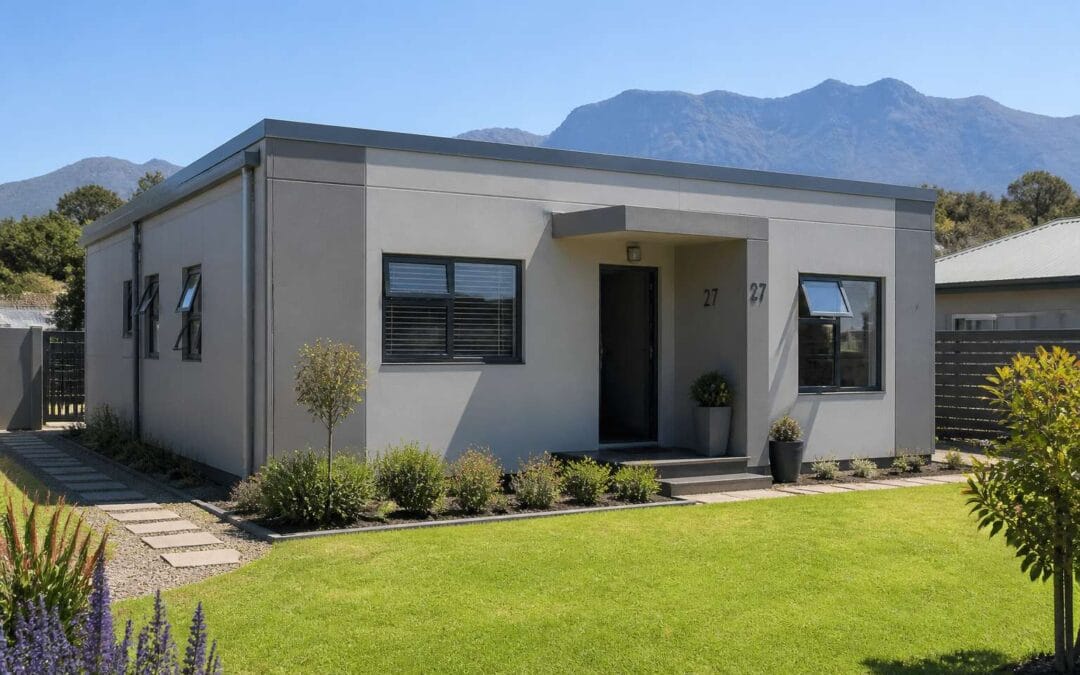
Nutec houses in South Africa have become a familiar sight along the coastline, where salt air and strong winds wear down ordinary materials. These structures rely on a dense fibre cement board bonded to a rigid insulation layer, all supported by a light steel skeleton.
The typical assembly includes three key elements:
- Fastened fibre cement panels for the outer skin
- A thermal core that moderates indoor temperatures
- Galvanised steel framing that resists corrosion
This combination gives each home a flat profile and a practical lifespan. I have seen these panels withstand seasonal storms that crack brickwork!
History and Origin in South Africa
The story of nutec houses in south africa reaches back to the late twentieth century, when the building industry needed a safer alternative to asbestos based boards. Everite, the company that created the name, spent years perfecting a blend of cellulose fibres and Portland cement. The resulting panel was strong, light, and fire resistant. It also survived the punishing humidity that steadily erodes lesser materials between the Kei River and Durban.
Coastal municipalities soon specified Nutec for low income housing and beach cottages alike. Government housing schemes delivered thousands of units through the 1980s, which normalised the flat faced aesthetic across the South African coastline. This history left a practical legacy:
– Decades of sea spray have proven Nutec’s durability
– The panels need no painting if the outer seal stays intact
– Older homes still perform as well as modern builds
By the 1990s, nutec houses in south africa had evolved from a provincial product into the trusted coastal system you still see today.
Common Uses and Applications
The coastal landscape of South Africa is dotted with a particular silhouette, one that whispers of salt air and practical living. From the palm-lined streets of Umhlanga to the windswept shores of the Western Cape, Nutec has become the definitive answer to a brutal environment. When we talk about nutec houses in south africa, we are referring to structures built with a fiber-cement cladding system, a robust and weather-resistant material that builders have trusted for decades.
This building system goes beyond simple aesthetics. It is the go-to choice for projects where longevity is non-negotiable. You will find this cladding on a diverse range of structures, from private family residences to government-funded housing projects. The material’s ability to resist moisture and insect damage makes it a superior alternative to timber in these specific climates. My own experience walking through older developments in the Eastern Cape confirms this; the facades on those homes from the 1980s still hold their form remarkably well.
The common uses for Nutec today are broader than many expect.
– Affordable housing developments where maintenance costs must stay low.
– Coastal holiday homes requiring resistance to constant sea spray.
– Industrial buildings and agricultural structures needing a non-combustible material.
– Extensions and renovations on older properties due to its ease of installation.
I have also seen a resurgence in its use for boundary walls and ceiling linings, areas where the material’s strength truly shines. It is not merely a temporary solution; it performs as a permanent structural element. The system allows for a smooth, flat finish that, once sealed, can be painted or left to age gracefully. This practicality is precisely why nutec houses in south africa remain a standard specification rather than a fading trend. The panels provide a dependable, rigid substrate that outlasts many conventional building materials in this demanding environment.
Whether the project is a duplex in a coastal township or a standalone family home near the lagoon, the application process remains consistent. The boards are lightweight enough for a small crew to handle, but their density offers immense structural rigidity once fixed. This dual nature, easy to work with yet tough in the field, is a rare combination in the construction industry. For the homeowner, this translates to lower insurance premiums and fewer repair cycles over the life of the property.
This fusion of adaptability and strength is the core reason Nutec has not only survived but thrived. It answers the specific calls of the South African climate and cost structure, cementing its role in both urban and rural settings. The applications are practical, the installation is straightforward, and the performance is proven.
Advantages and Disadvantages
Durability and Weather Resistance
Few materials spark as much debate among homeowners. For nutec houses in south africa, the reality is a trade-off between cost and care. The cement-bonded fibreboard resists the country’s harsh UV exposure and seasonal rains, yet this performance is not automatic. I have seen too many owners learn this the hard way!
The advantages are tangible:
- Fire rating outperforms timber construction
- Resistance to rot, termites, and coastal humidity
- Minimal upkeep compared to painted brickwork
But the disadvantages become apparent with age. Impact can fracture panels, and trapped moisture may degrade seals. Durability depends on installation quality and maintenance discipline. Panels endure weather extremes, but neglect shortens their lifespan. Nutec houses in south africa demand attention, and that responsibility is the owner’s alone.
Thermal and Acoustic Insulation Properties
Thermal performance in nutec houses in south africa is a study in contradictions. The cement fibre panels absorb heat during the day and release it after sunset, which can be a blessing on the Highveld and a curse in subtropical KwaZulu-Natal. Without ceiling insulation, the interior temperature swings can catch owners off guard.
Acoustic behaviour follows a similar pattern. The dense board blocks general street noise, but impact sounds, especially rain hammering on the roof, travel with surprising clarity.
What you actually experience depends on these variables:
– Panel thickness and mass influence thermal lag.
– Roof ventilation determines how much trapped heat lingers.
– Wall cavities alter both heat transfer and sound penetration.
Nutec houses in south africa rarely perform the same way twice. Orientation, shading, and internal layout shift the outcome more than the material itself. For nutec houses in south africa, insulation is never a default; it is a conscious choice.
Fire and Pest Resistance
Nutec houses in south africa have a clear advantage in fire resistance. The cement fibre boards do not ignite, offering real protection in fire-prone areas. Pest activity follows a similar pattern. Termites, a common problem for timber homes, find no food in the dense panels. This saves owners from costly treatments.
But the material has limitations. Unprotected cut ends and unsealed gaps permit moisture ingress, which can lead to fungal decay. The boards themselves resist pests, yet the timber framing behind them remains susceptible. Without pressure treatment, that substructure is still a target for borer beetle and termite colonies.
Fire performance also depends on installation. Open joints in the cladding allow flames to penetrate the cavity. Nutec houses in south africa therefore reward precise workmanship.
Potential Drawbacks to Consider
One of the quiet advantages of nutec houses in south africa is the speed of assembly. Panels arrive ready to fix, which trims weeks off a building schedule compared to brick and mortar. Owners also appreciate the lower foundation load, since the lightweight sheets reduce structural demands.
But there are real trade-offs. The boards are brittle when handled carelessly, and cutting them on site produces silica dust that demands proper respiratory protection. Resale value can be a sticking point too. Many buyers still equate permanent housing with brick, so a Nutec home may face scepticism in certain neighbourhoods.
Consider these drawbacks before committing:
– Finding contractors experienced with cement fibre board is not always easy.
– Hidden cavities make retrofitting electrical wiring more difficult.
– Insurance premiums can vary depending on how the insurer classifies the structure.
None of these issues are deal breakers, but they deserve honest thought. For families on a tight timeline, nutec houses in south africa still provide a practical path to ownership. Just weigh the long term picture against the upfront convenience.
Construction and Installation Process
Site Preparation and Foundations
The real work begins long before the first wall panel arrives. Site preparation for nutec houses in south africa follows a familiar rhythm, but local conditions shape every decision. Digging test pits, checking the water table, and assessing drainage are non-negotiable steps, especially in coastal regions where salt-laden air and shifting sands complicate the build.
Foundations typically fall into three categories: concrete strip footings on stable inland ground, reinforced slabs for expansive clay, and screw piles for steep or sandy plots. Each option changes the installation timeline. A slab needs weeks to cure. Screw piles can support the frame within days. Either way, the steel substructure must sit perfectly level, because Nutec cladding is rigid and unforgiving of misalignment. Getting this stage wrong means costly adjustments later.
Framing and Structural Support
The steel substructure forms the skeleton upon which every nutec house in south africa depends. Once the foundation cures, the galvanized steel frame rises with a speed that surprises most first time builders. Each section bolts together with precision, and this is where the rigidity of the panels demands absolute accuracy. A frame that shifts even a few millimetres will cause delays when the cladding arrives on site.
Structural support relies on lightweight steel columns and roof trusses engineered to carry the weight of the fibre cement sheeting. I once watched a crew assemble the complete framing for a 70 square metre home in three days flat:
– Erecting wall frames with diagonal bracing
– Setting roof trusses and purlins
– Aligning every structural member to a taut string line
That pace is one of the strongest arguments for nutec houses in south africa, and it never fails to surprise first time buyers!
Installing Nutec Cladding Boards
Once the steel frame stands true, the cladding boards give the structure its finished surface. Nutec houses in south africa depend on this stage to lock in crisp lines and a uniform exterior. The boards arrive in 2.4 metre sheets, and each one needs cutting with carbide tipped blades. Standard woodworking tools dull quickly on fibre cement.
The fitting sequence matters more than most owners realise:
- Fixing sheets from the bottom up so each row overlaps the one below
- Driving corrosion resistant screws into every marked stud position
- Leaving a 2 mm gap at each joint for expansion and movement
Silicone sealant fills those gaps after the boards go up. Window and door openings receive special flashings, and corners get purpose made trim. Installers check every sheet with a spirit level as they work. A crooked board looks worse than a crooked frame.
Roofing and Finishing Touches
Once the cladding is fixed, the roof takes over. On nutec houses in south africa, steel trusses carry lightweight IBR sheeting or tile battens. The choice affects the eaves detail and the final silhouette. Installers fit the roof before the finishing touches, because the flashing must tuck behind the cladding, not the other way around.
The finishing sequence follows a strict order:
1. Fix the fascia and gutter brackets to the truss ends.
2. Install the bargeboards and corner trims.
3. Seal every penetration, from the plumbing vent to the aerial bracket.
4. Apply the final coat of elastomeric paint.
A house only reads as finished when the roofline is true. I have watched a single misaligned fascia board ruin an entire elevation. The last trades on site always leave their marks. For nutec houses in south africa, the finishing touches decide whether the structure looks engineered or merely assembled.
Hiring Professionals vs DIY
Getting Nutec houses in South Africa assembled properly comes down to one decision: who does the work. I have seen skilled DIYers produce clean results on small cladding jobs. The same owners often stumble on full installations. Nutec boards are unforgiving. Cut them wrong and the fixings show. Fix them wrong and the sheets buckle by spring.
Professionals bring the right tools, but more importantly, they know the sequence. The order of cuts, the placement of spacers, the expansion gaps. DIY carries appeal, especially for a single shed or garage. Yet Nutec houses in South Africa involve structural frames and flashings that need a trained eye. Timber must stay dry. Fixings must align. The whole structure must breathe. That is a different kind of expertise!
Here is what I tell owners to weigh:
- DIY saves money but costs time.
- Pros deliver speed and a warranty.
- One wrong cut means a new sheet.
Cost, Maintenance, and Sustainability
Initial Cost Breakdown
The initial cost breakdown for Nutec houses in South Africa is more transparent than many expect. Instead of surprising tape-up fees, you face a predictable split. A typical budget allocates funds like this:
- Foundation and light steel framing: about 40%
- Nutec cladding boards, flashings, and fixings: 35%
- Roofing, windows, and service connections: the remaining 25%
That balance works because the boards serve as both wall surface and weather barrier. Maintenance stays easy too. A soft brush wash every few years handles grime, and damaged sheets can be swapped individually. Over time this low upkeep saves money. Sustainability also favours the system. The fibre-cement core needs less manufacturing energy than fired brick, and old panels can be repurposed. For tracking whole-of-life costs, these houses remain a sensible option.
Long-Term Maintenance Requirements
Thirty year lifespans are common for Nutec houses in South Africa, but the true cost effectiveness shows in the decades after construction. The fibre cement boards do not rot, warp, or attract termites, which removes the two biggest repair bills for conventional homes. Your annual budget for upkeep might only cover paint for the steel frame and a check on the sealant around windows and doors.
The maintenance rhythm is refreshingly simple. A gentle high pressure wash every few years removes the dust and grime that accumulates on the cladding. If a board suffers impact damage, you replace that single panel without disturbing the rest of the wall structure. This modular approach keeps repair costs low and prevents small issues from turning into structural headaches.
– Inspect the rubber gaskets between boards annually
– Reapply rust resistant paint to any scratched steel
– Clear gutters and downpipes twice a year
Sustainability extends beyond the initial build. The manufacturing process for fibre cement uses less energy than brick firing, and the boards themselves can be repurposed as garden edging or shed cladding at the end of their life. For families watching their long term expenses, the combination of durable materials and simple care routines makes these homes a wise investment. I have seen estates where twenty year old Nutec houses still look sharp with minimal intervention, which speaks to the material’s staying power.
Energy Efficiency and Insulation Tips
Energy performance is where nutec houses in South Africa quietly outshine conventional brick homes. The fibre cement cladding pairs well with ceiling insulation, and the modest spend on thermal linings repays itself within a few winters. Many owners pair wall cavities with aerated floor systems to stabilise indoor temperatures.
The most effective energy-efficient features in these homes include:
– Reflective foil on the interior of exterior walls
– Sealed gaps around door frames and window openings
– Thermal curtains or double-glazed inserts
These features reduce reliance on electrical heaters and coolers. When you weigh the monthly savings against the purchase price, nutec houses in South Africa remain a sensible option for budget-conscious families.
Environmental Impact and Sustainability
Owning one of the nutec houses in South Africa involves a financial reality that extends beyond the initial price tag. The cladding’s lifespan, often exceeding four decades, means the embodied energy of production is spread across many years of service. That durability shapes maintenance schedules; repainting every five to seven years and replacing damaged sheets promptly keeps the structure sound. In our experience, the upkeep demands are lighter than most owners expect.
Sustainability comes from the material’s composition. Fibre cement contains no timber, reducing pressure on forests, and its mineral base permits straightforward disposal at end of life. Several environmental advantages stand out:
- Lower water consumption during manufacturing compared to concrete products
- Minimal on-site waste during installation
- Offcuts repurposed as filler or disposed of without toxic residue
These factors matter when assessing the true footprint of nutec houses in South Africa.
Comparing Nutec to Other Building Materials
When you stack nutec houses in South Africa against brick or timber, costs shift. Brick needs bricklayers and weeks of curing. Timber requires ongoing treatment. Nutec cladding goes up faster, trimming labour bills!
Maintenance follows a similar pattern. In my experience, brick walls need repointing often. Timber demands regular staining. Nutec needs a paint job every five to seven years. The surface does not warp or split.
Sustainability is interesting. Clay brick production fires kilns. Timber harvesting raises forestry questions. Nutec uses no timber, and its mineral base means offcuts dispose of without toxic residue.
- Brick: high embodied energy from kiln firing
- Timber: ongoing chemical treatments for pest resistance
- Nutec: lower water use during manufacturing
For owners weighing these factors, nutec houses in South Africa offer lower ongoing costs than brick, less upkeep than timber, and a cleaner environmental story than both.
Resale Value and Market Trends
With South African property values climbing steadily, the financial logic behind nutec houses in south africa grows more compelling each year. Buyers increasingly recognise that this cladding offers the visual appeal of modern architecture without the punishing maintenance regimes of conventional materials. When you calculate the true cost of ownership over a decade, the savings become substantial. A homeowner avoids frequent repainting, structural repairs from damp, and those endless battles against wood-boring insects. The long term affordability of nutec houses in south africa often surprises first time buyers who assumed only brick offered security of investment.
Resale performance follows an interesting pattern in the current market. Estate agents report that well maintained nutec properties attract serious attention, particularly from younger buyers focused on sustainability and lower utility bills. The mineral composition of the boards provides natural insulation, which translates into a tangible selling point during winter viewings. Market trends also show a growing preference for homes that require less ongoing expenditure. Sellers who invest in a fresh coat of quality paint before listing often achieve prices comparable to brick equivalents in the same neighbourhood. The perception gap is closing, and savvy investors are taking notice. For those watching the property indices, the trajectory suggests that nutec houses in south africa will continue gaining favour as the financial benefits become common knowledge.
– Insurance premiums often decrease because of the material’s fire resistance and termite proof nature
– Municipal valuations are increasingly reflecting the durability of these structures
– The global shift toward eco friendly construction boosts local buyer interest