
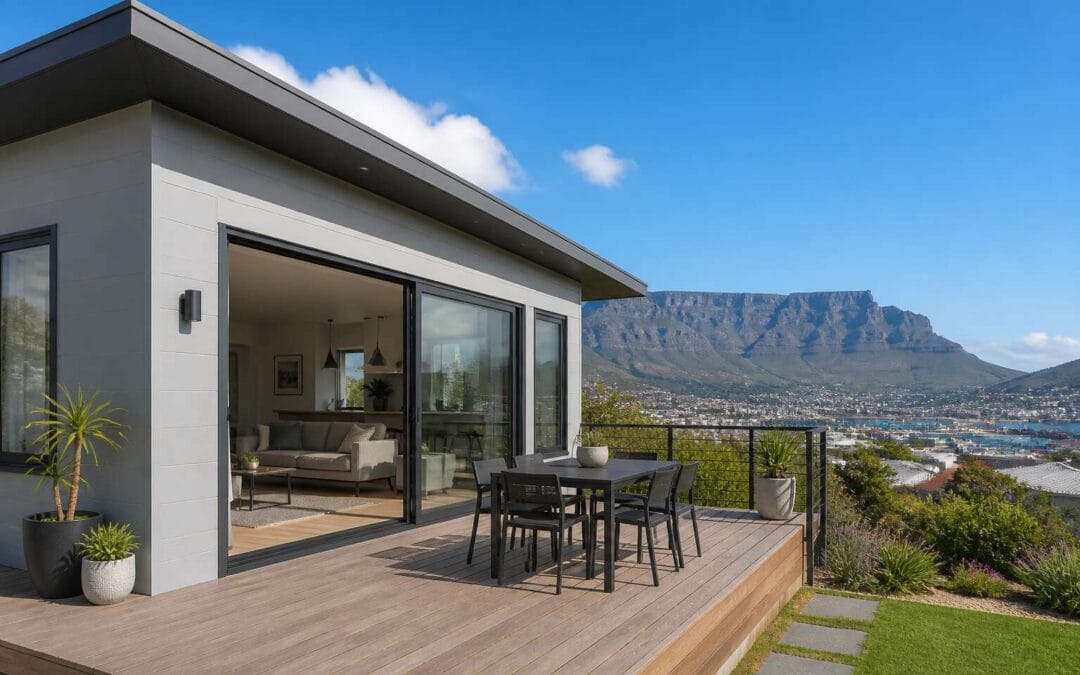
Understanding Nutec Houses in Cape Town
Construction Methods and Material Quality
When you start looking at nutec houses for sale in cape town, the construction method often raises questions. Nutec panels are a blend of cement and cellulose fibres, pressed into boards that resist fire, moisture, and termites. The building process typically uses a steel or timber frame, then clads it with these boards. It is faster than brick and mortar, but the quality depends on the installer’s precision!
I have inspected several of these homes, and the material holds up well in coastal winds. The boards do not rot or warp like timber. However, proper sealing at joints is critical. A poorly fitted panel can let dampness seep in.
- Fire resistant exterior
- Lightweight yet durable
- Requires minimal maintenance
Without proper installation, even the best Nutec boards fail.
Key Benefits of Choosing a Nutec Home
Cape Town’s coastal climate demands homes that can handle salt-laden air and intense sun. Nutec houses for sale in Cape Town present a pragmatic option for buyers seeking longevity without the heavy upkeep of masonry. The interior temperature stays stable because the panels act as a natural barrier against heat gain.
From an investment perspective, these properties have shown steady appreciation. Their quick construction timeline means developments can be completed faster, which keeps the initial purchase price competitive. Owners also spend less on repainting and treating damp walls.
Common benefits include:
- Greater design flexibility for open-plan living
- Steady rental appeal in coastal neighbourhoods
Most nutec houses for sale in Cape Town are located in residential areas close to schools, shops, and main roads. The consistent demand makes them a reliable choice for first-time buyers or those expanding their property holdings.
Dispelling Common Myths About Prefabricated Homes
Few phrases in property listings invite more skepticism than “lightweight construction.” It evokes images of temporary structures, yet the reality of nutec houses for sale in cape town is far more substantive. The misconception stems from a confusion between the material and the method. Nutec is a high-density fibre cement, engineered for impact resistance and fire safety, not a flimsy alternative. A home built this way still requires a conventional concrete foundation and a proper framework, so the final product feels solid underfoot and handles the windiest winter storms without a shudder.
The perception issue often fades once a buyer actually walks through the interior. Standard brick homes carry a certain thermal mass that can work against you in summer, holding the day’s heat well into the evening. Nutec’s insulated panel system achieves a comparable comfort level with less energy input, which is a quiet advantage that owners discover in their first electricity bill. There is a practical element to this shift in perception; estate agents in the Western Cape have noticed that the stigma around prefabrication is slowly dissolving as more people experience these homes firsthand. Buyers are beginning to understand that the value lies in the engineering, not the label.
When you inspect one of these properties, consider what you are actually seeing. The internal layout often features a smart use of space that traditional builders find difficult to replicate at the same price point. Look past the cladding and consider the practical benefits that speak to daily living:
– Lower insurance premiums due to the material’s fire-resistant properties
– Minimal maintenance on exterior walls, with no brickwork to crack or paint to peel every few years
– Faster occupancy if you are buying off-plan, meaning you could be settled within months, not a year
The market is correcting a long-held bias, and those who move early often secure a property that outperforms its initial cost. It is not about settling for a compromise; it is about recognising a smarter investment in the current economic climate.
Prime Locations for Nutec Properties Across Cape Town
The Northern Suburbs: Family-Friendly Neighborhoods
The Northern Suburbs offer something increasingly rare in Cape Town: space that still feels connected. Families seeking nutec houses for sale in cape town find themselves drawn to Durbanville, Brackenfell, and Kraaifontein, where schools and shopping centres sit within a short drive. Nutec homes here are not squeezed onto cramped stands. Many rest on generous plots with room for a jungle gym or a vegetable patch.
Commuting patterns have shifted. Parents no longer need to live ten minutes from the city bowl. What matters is reliable infrastructure and a sense of safety. The Northern Suburbs deliver both, which explains the demand for nutec houses for sale in cape town.
- Well-established public and private schools
- Proximity to the N1 and N7 corridors
- Growing retail hubs like Tyger Valley
For a family buying a Nutec home, the advantage is speed of occupation. You settle in quickly, spend weekends exploring the Durbanville hills rather than managing repairs.
The Southern Peninsula and Coastal Living
Ask a Kommetjie resident why they chose a prefabricated home, and the answer is usually the view. The Southern Peninsula, from Muizenberg to Cape Point, holds some of the most sought-after coastal stands in Cape Town. For buyers searching nutec houses for sale in cape town, this area pairs functional construction with an ocean backdrop that most suburbs cannot match.
- Muizenberg, where elevated stands catch the afternoon sun
- Fish Hoek, close to the rail line and tidal pools
- Scarborough, for quieter, wind-swept plots
Nutec homes in these locations sit on stable, graded ground above the dunes. The panels resist damp, and the exterior treatments hold up against salt-laden air. That matters when the south-easter comes through. Commuting to the city bowl takes roughly forty minutes by train or car, a trade buyers willingly make for a view that changes with every tide.
Emerging Areas and New Developments in the Cape Flats
Property data from the City of Cape Town shows affordable housing delivery in the Cape Flats has accelerated by nearly thirty percent since 2021. That shift is drawing first-time buyers into areas once overlooked, and demand for nutec houses for sale in cape town reflects this momentum.
Philippi, Mitchells Plain, and Delft anchor the current wave of development:
- Philippi offers vacant stands near the horticultural area at accessible land prices.
- Mitchells Plain has established schools, shopping centres, and infill developments on serviced plots.
- Delft sits along the R300, keeping commute times to the airport or Bellville practical.
New housing projects in these areas combine masonry units with prefabricated alternatives on the same estates. Buyers who opt for nutec houses for sale in cape town gain a move-in-ready home without the lengthy construction timelines attached to traditional building. For families in the rental trap, that speed is the decisive factor!
Inland vs. Coastal: Which Suits Your Lifestyle?
Inland suburbs like Brackenfell and Kraaifontein offer warmer summer days and quicker access to the Winelands. Coastal pockets such as Strand or Gordon’s Bay deliver sea breezes and ocean views, but salt air demands more upkeep. When searching for nutec houses for sale in cape town, the inland option often secures a larger erf for the same price.
Consider your week:
- Commute distance to work or school
- Tolerance for wind and humidity
- Need for garden space versus sea views
If you work in Bellville or Stellenbosch, inland keeps the drive short. If weekends belong to the beach, coastal living wins. Your daily rhythm, not property charts, settles the argument.
Price Ranges and Market Trends for Nutec Houses
Average Cost Per Square Meter for Nutec Homes
The fluctuating rand and the global cost of construction materials have reshaped what buyers can expect to pay for a quality home. In the current climate, the average cost per square meter for Nutec homes provides a stable yardstick in an otherwise volatile market. While conventional brick and mortar prices seem to climb with every quarterly report, the pricing for Nutec houses for sale in Cape Town remains remarkably competitive, often reflecting a savings of up to twenty percent compared to traditional builds. This economic resilience makes them a compelling option for the discerning buyer who values both speed and financial prudence.
Market trends indicate a steady appreciation in value for these properties, particularly as the perception of prefabricated construction shifts towards permanence and durability. When I peruse the current listings, the pricing tiers generally break down as follows:
– Entry level and smaller two bedroom units often start in the range of R950,000 to R1.3 million.
– Mid-sized family homes with three bedrooms typically fall between R1.4 million and R1.9 million.
– Larger, customised executive models can easily command R2 million and upwards, especially on premium stands.
The price disparity across the city is fascinating to observe; a unit in the Southern Peninsula commands a premium for its coastal proximity, while the Northern Suburbs offer more square meterage for the same investment. This variance creates a dynamic market where buyers can leverage their budget against their lifestyle priorities. Ultimately, the cost per square meter remains a guiding light, but the total investment tells the full story of what is possible. The market for nutec houses for sale in cape town has matured into a viable, stable asset class, no longer a mere alternative, but a primary choice for the pragmatic homeowner.
Price Comparison: Nutec vs. Conventional Brick Construction
Weighed against brick and mortar, the price gap for nutec houses for sale in cape town is hard to ignore. A standard 180 square meter brick home can easily reach R2.1 million once plastering, painting, and finishing are complete. A comparable Nutec structure typically lands near R1.6 million. That difference of roughly R500,000 is not a rounding error.
Much of the saving comes from reduced labour hours. Traditional masonry requires curing time, skilled bricklayers, and multiple finishing trades. Nutec panels are prefabricated and installed in days, not weeks. The build speed alone cuts costs significantly.
Then there is the maintenance equation. Brick homes need regular repainting and damp-proofing, especially in Cape Town’s coastal climate. Nutec cladding resists moisture and termites. Over ten years, that recurring expense adds up.
The result is simple. Buyers who choose nutec houses for sale in cape town pay less upfront and less over time, all while getting a sturdy, modern home.
Factors That Influence Property Value in Cape Town
Property values in Cape Town rarely follow a straight line, and Nutec homes are proof of that. Buyers scanning nutec houses for sale in cape town will notice a pattern: proximity to the ocean adds a premium, while access to schools and transport shifts the numbers in unexpected ways. In my experience, the market does not behave uniformly across the peninsula.
Several factors influence what you might pay:
- Location relative to the Atlantic Seaboard versus the False Bay coast.
- Zoning regulations and the size of the erf.
- Demand for low-maintenance housing among retirees and investors.
What stands out is the direction of the trend. As conventional builds become slower and more expensive, the value of nutec houses for sale in cape town continues to appreciate. Buyers who purchased a few years ago are now sitting on equity they never expected.
Recent Sales Data and Asking Prices
I have noticed a peculiar pattern when scanning nutec houses for sale in cape town. In the last quarter, asking prices for these homes have edged upward by nearly eight percent, while sale dates lag behind. This suggests buyers are cautious, yet the underlying demand remains constant. Recent sales data from the Southern Suburbs reveals a three bedroom nutec home closing at 2.1 million, slightly below its asking price of 2.3 million. Meanwhile, a smaller unit on the False Bay coast sold within days at asking price.
.
The delta between initial listing and final sale price tells the story. For nutec houses for sale in cape town, the spread averages around four percent, narrower than for conventional homes. This tight gap reflects a market where informed buyers recognize the enduring worth of these steel framed structures. Two recent transactions illustrate the point:
- A two bedroom in Fish Hoek, listed at 1.6 million, sold for 1.55 million.
- A four bedroom in Durbanville, listing at 2.8 million, achieved 2.75 million all cash.
This stability signals that buyers who know the true value of these homes are willing to move swiftly, though they still negotiate.
Long-Term Investment Potential and Resale Value
The real proof of a home’s worth sits in its resale value, a topic that emerges repeatedly when discussing nutec houses for sale in cape town. Beyond the initial appeal of modern construction and lower utility bills, these homes demonstrate a surprising degree of price resilience. I have watched the market long enough to see that buyers often discover the structural integrity of Nutec frames translates directly into long term peace of mind, which they are willing to pay for.
Price appreciation in this segment is often more stable than in the conventional brick-and-mortar market. Because the supply of well-maintained Nutec properties is finite, particularly in established suburbs, the competition remains healthy. This stability offers a distinct advantage for owners:
– A steady rental demand, as tenants appreciate the thermal efficiency and lower energy costs.
– The inherent durability of the steel frame, which resists the warping, rot, and termite damage that can plague traditional wooden structures.
– Lower insurance premiums in some cases, reflecting the fire-resistant nature of the cladding.
While the Southern Suburbs data shows a four percent average spread between asking and final price, that gap narrows further for the right property. The sales figures from Durbanville, where a four bedroom achieved an all-cash offer, indicate that confident buyers recognize a sound asset. For me, the quiet consistency of these transactions speaks louder than any dramatic market spike. The value is not in fleeting trends, but in the enduring quality of a building that asks for little and gives back a great deal. This is why these homes continue to turn over steadily, even when broader conditions get uncertain.
The Buying Process: Step-by-Step Tips for Nutec Homes
Financing Options and Loan Approvals for Prefabricated Homes
Before you fall for a particular listing among the nutec houses for sale in cape town, understand that financing a prefabricated home follows a slightly different path than a brick property. Most South African banks accept these homes if they are installed on a permanent foundation and comply with municipal standards. You will still need a formal bond application, but the process often moves faster because construction timelines are shorter.
Secure pre-approval first! This gives you a clear budget and signals to sellers that you are serious. For loan approvals, gather your ID, latest payslips, and bank statements. Your bond originator can guide you through requirements for non-traditional builds.
- Confirm the installer provides a NHBRC warranty.
- Expect a bank-appointed valuator to inspect the foundation.
- Factor in transfer costs and bond registration fees.
Using a specialist bond originator who knows prefabricated homes can ease the paperwork and speed up the final approval.
Essential Structural Inspections and Quality Checks
Purchasing a prefabricated dwelling demands a different set of eyes than a conventional brick home. When you scan nutec houses for sale in cape town, the visible walls tell only half the story. The real scrutiny belongs to the joints, the anchoring system, and the steel frames beneath the cladding.
Essential structural checks should follow a methodical order:
– Verify the foundation is level and free of cracks where the unit meets the ground.
– Inspect the roof sheeting for rust, especially around screw fixings.
– Check interior walls for moisture ingress or previous leak repairs.
– Confirm the electrical wiring has a valid Certificate of Compliance.
– Examine the underside for corrosion on the chassis beams.
I always tell buyers to budget for a professional inspection. It adds cost but removes guesswork. Many skip this step and later face hidden repair bills. Municipal records deserve equal attention. A property may look pristine yet lack the approved plans required for insurance or resale.
Legal Considerations: Title Deeds, Zoning, and Approvals
A title deed is more than a name on paper. It carries the zoning rights, classification, and restrictions that decide whether a Nutec unit can legally change hands. Homeowners often admire the cladding first, yet overlook the legal spine of the sale.
When shortlisting nutec houses for sale in cape town, open the Deeds Office search. The seller should produce a title deed, a rates clearance, and a municipal approval stamp for that specific dwelling. Zoning rights under the municipal scheme must assign the property for residential use. Land marked agricultural or business scuppers both insurance and transfer.
Follow this legal sequence:
- Match the seller’s identity against the registered title owner.
- Verify the zoning certificate to confirm a dwelling is permitted.
- Request the approved building and service plans.
- Inspect the title restrictions for bans on extensions, together with existing servitude conditions.
Once those documents pass review, the transfer attorneys finalise the ownership, that process rarely stalls on nutec houses for sale in cape town until the plans contradict what stands on site.
Negotiating the Best Price with Sellers
Negotiating on nutec houses for sale in cape town requires a different weapon than brick homes. The seller knows their build costs, yet they often overestimate the resale value. Use that gap. Settlement dates count more than the offer amount, and a seller who suffers holding costs will bite at a quicker close.
Run this sequence when you are at the table:
1. Compare the asking price to recent transferred sales for the same cladding type.
2. Confirm whether the title deed and municipal zoning match the structure standing on site.
3. Ask for the approved building plans, because missing approvals are your discount.
I once watched a buyer shave R45,000 off a Nutec unit by flagging an unapproved carport that cost R2,000 to fix. That is the whole game. The seller wants speed and certainty. You carry both, but you cannot have them for free. Start low, stay logical, and let the rates clearance deadline work for you.
Working Effectively with Cape Town Estate Agents
Estate agents in Cape Town have a particular way of presenting nutec houses for sale in cape town. They talk about the garden, the views, the new paint. They avoid the words prefabricated or panel construction until the second viewing. This is not deception. It is timing.
The buying process rewards buyers who recognise the sequence. I have watched agents grow comfortable the moment a buyer inspects the cladding without flinching. You ask about the plans, and you watch their comfort level. A confident agent welcomes the questions. A nervous one changes the subject. The ones who succeed treat the transaction as a partnership. They know the transfer, the rates clearance, and the bond approval. They also know that a Nutec buyer, once satisfied, is loyal. Be that buyer, but remain unhurried.
Renovating, Extending, and Maintaining Nutec Houses
Practical Options for Extending or Adding Rooms
Adding a room to a Nutec home rarely involves a sledgehammer. The panels sit on a timber or steel frame. You can sister new framing onto the existing structure, or bolt on a separate module and connect it with a covered walkway.
Maintenance is mostly about the joints and paintwork. The fibre-cement boards handle Cape Town’s weather well, but the sealant needs checking every few years. That regular check saves real money later!
Common additions include:
- Extra bedrooms with en-suite bathrooms
- A flatlet with a separate entrance
- A larger open-plan kitchen
Each option requires municipal building plan approval. For anyone browsing nutec houses for sale in cape town, this flexibility matters. You are not knocking down load-bearing brick walls; the frame-based system is designed for modification.
Interior Design and Styling Ideas for Nutec Interiors
The interior of a Nutec home faces a certain kind of pressure. The fibre cement panels hold a stark neutrality, while the exposed timber frame offers a lighter touch of warmth. This tension, when respected, becomes a design guide. I see the panel seams as a grid for arranging art, not a flaw to cover. The spacing between boards creates an odd rhythm that can echo your furniture layout.
Light behaves differently on these surfaces. A low afternoon wash of sun will flatten the texture, so the visual tricks come from what you add: a rough linen sofa, a dense floor mat, or a tall timber bookcase. For anyone browsing nutec houses for sale in cape town, the interior is a plain canvas that rewards confident choices.
Use these styling triggers:
– Let an exposed edge remain exposed, as a feature.
– Adding one dark index wall between two white panels brings depth.
– Balance a small room with a slim, vertical mirror to break the pass line.
Energy Efficiency: Insulation, Solar, and Climate Control
Renovating a Nutec home is the moment to interrogate its thermal envelope. The fibre cement panels handle wind well, but they do little to slow heat transfer. When extending, treat insulation as the main event. Closed cell foam in the cavity, reflective foil under the roof, and double glazing on the west elevation will do more for comfort than any cosmetic upgrade.
Cape Town’s climate rewards a measured approach. The summer southeaster drives heat through unshielded walls, while winter damp creeps through the floor line. Solar panels make sense, but only after you have reduced the demand. A 5 kW system with a heat pump for water gives you the best return on investment.
For anyone browsing nutec houses for sale in cape town, these upgrades are the difference between a house that feels thin and one that feels solid.
Upkeep and Repairs for Exterior Nutec Cladding
Renovating a Nutec house begins with respecting the fibre cement cladding system. Unlike brick, these panels flex slightly under load and react to moisture with precision. When extending, match existing panel profiles and fastener spacings exactly, otherwise the roofline will betray the addition. Work with a contractor who knows Nutec specifically.
Upkeep for exterior Nutec cladding is periodic but not onerous. After each stormy season, walk the perimeter. Inspect for chips, cracks, or raised fastener heads. I recommend a simple rhythm:
- Reseal joints around windows and doors with marine-grade sealant
- Replace cracked panels immediately instead of patching
- Repaint with breathable acrylic every five years
For anyone browsing nutec houses for sale in cape town, the condition of the cladding speaks volumes. A home with a documented maintenance history feels different inside, because dry cavities mean warm rooms. That solidity is worth seeking out.